
Properties

  • Properties

Our Process

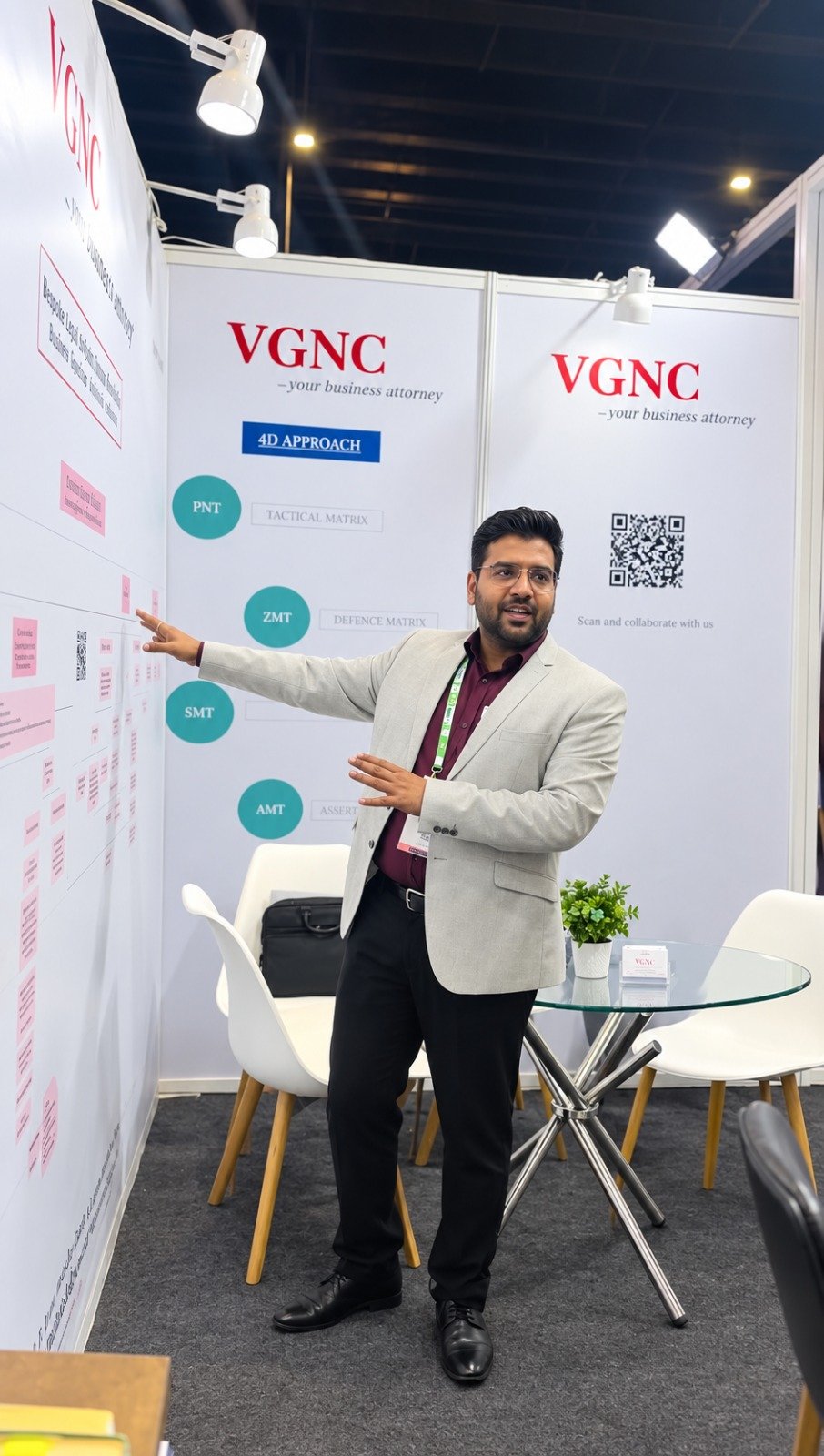
How We Do It – 4D Approach

VGNC 4D Approach
01
FMT

Factual Matrix

At this stage we gather and mark all the facts of the case and compile all the documents and evidence in support of the facts. At this stage it does not matter whether the facts and evidence support our case, or they are adverse to us.

We simply compile all facts and evidence such that we have a clear factual position on record. Resisting or ignoring adverse facts is never a solution. We have to overcome and find a way out through the adverse facts.


02
DMT

Defence Matrix

At this stage we mark all the defences available to us. Defence is not very apparent, and it involves professional skill to pull them out.

Defences are again of two categories, firstly, what defence we have on the facts and evidence marked at the first stage FMT.

Then secondly there are purely legal defences available on the jurisdictional and technical side of the law.

So, at the level of DMT we map and document both the defences, factually as well as legally.

At this stage we find out all the judicial precedents and court cases on the point of law identified. We do our Case Law Compilation - CLC.

03
PMT

PMT – Pleadings Matrix

After FMT and DMT are on place then comes the stage of articulating our submissions to be pleaded before the adjudicating authorities and courts. This articulation of submissions is a blend of science and art, both.

The whole idea is that our issues and our defences are placed in a lucid and crisp manner, in order of priority we set, such that the Adjudicating Authority, makes up its mind in our favour, even before we appear to argue the case.

It is only after in-house debate on the draft submissions, and after considering all the counter objections and revising the drafts accordingly, that we proceed to finalise the draft submissions and pleadings and then sumit it before the Adjudicating Authority/Court.

This is what we call the stage of Pleadings Matrix.

04
AMT

AMT – Arguments Matrix

Before the date of actual oral hearing, we compile an Arguments Matrix and try to anticipate how the hearing will actually go before the court, step by step. How we will open our arguments. What grounds are to be pressed first. How the evidence is to be demonstrated to the Court. What questions the court will ask. What objections the opposite counsel will raise. How we will counter those objections.

In our experience, it is not how good we narrate our case, it is all about how well we demonstrate our case, so that the judges arrive at their own conclusion which we wish them to arrive at. No need to make them agree to our arguments. It is that they come to their own conclusions, which eventually matches with our conclusions.

Call Icon WhatsApp Icon